
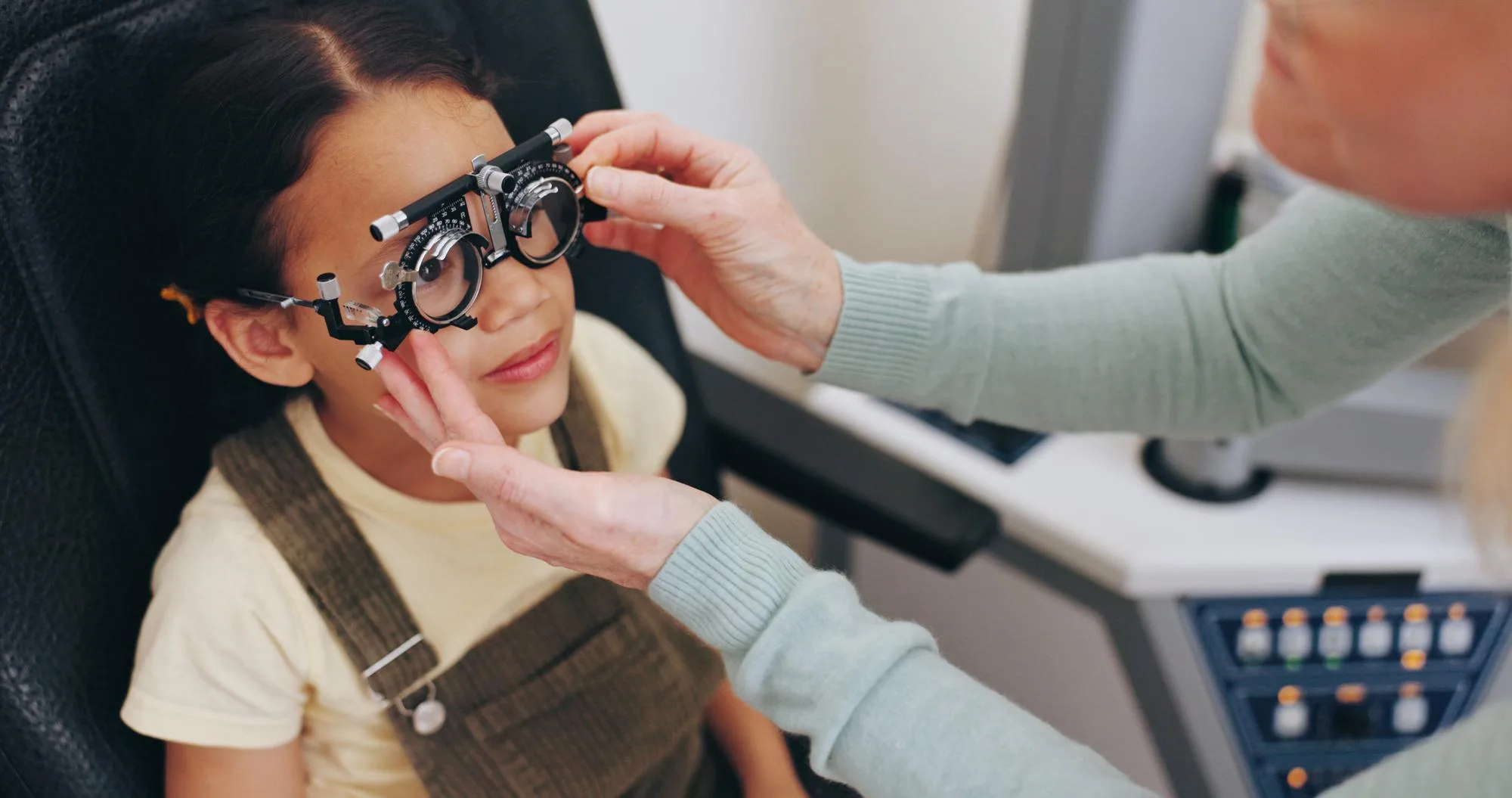
When your child complains of blurry vision or struggles to read the whiteboard at school, the instinct is to book an appointment with any eye clinic nearby.
But not every eye doctor may have specific training or experience in examining, or treating children. Pediatric eye care requires specialised training, different equipment and a completely different approach to communication and diagnosis.
This guide explains what makes pediatric eye specialists different, when your child needs a specialist, and how to find qualified care in Malaysia.
Key Takeaways
- General eye doctors and pediatric eye specialists use different examination methods and equipment designed for children’s developing visual systems.
- Children cannot always communicate symptoms clearly, making specialised diagnostic skills essential for accurate assessment.
- Early detection of vision problems can help reduce the impact that poor vision may have on learning and support timely treatment for conditions such as amblyopia (lazy eye).
- Parents searching for a pediatric eye specialist near me should verify the doctor’s qualifications, experience with children, and availability of child-friendly diagnostic technology.
Why Children’s Eyes Need Different Care
A child’s visual system is not simply a smaller version of an adult’s. It is still developing, which means problems that appear minor can have long-term consequences if left untreated.
Children’s eyes grow rapidly during the first few years of life. Refractive errors, alignment issues and focusing problems can interfere with normal visual development during this critical window.
Unlike adults, children often cannot articulate what they are experiencing. A five-year-old may not realise that blurred distance vision is abnormal, or that one eye sees less clearly than the other.
This makes clinical observation, behavioural assessment and age-appropriate testing methods essential. Pediatric eye specialists are trained to detect problems that children cannot describe.
What Pediatric Eye Specialists Do Differently
Pediatric eye care involves more than smaller frames and simpler explanations. The clinical approach differs in several fundamental ways.
Examination Techniques Designed for Young Patients
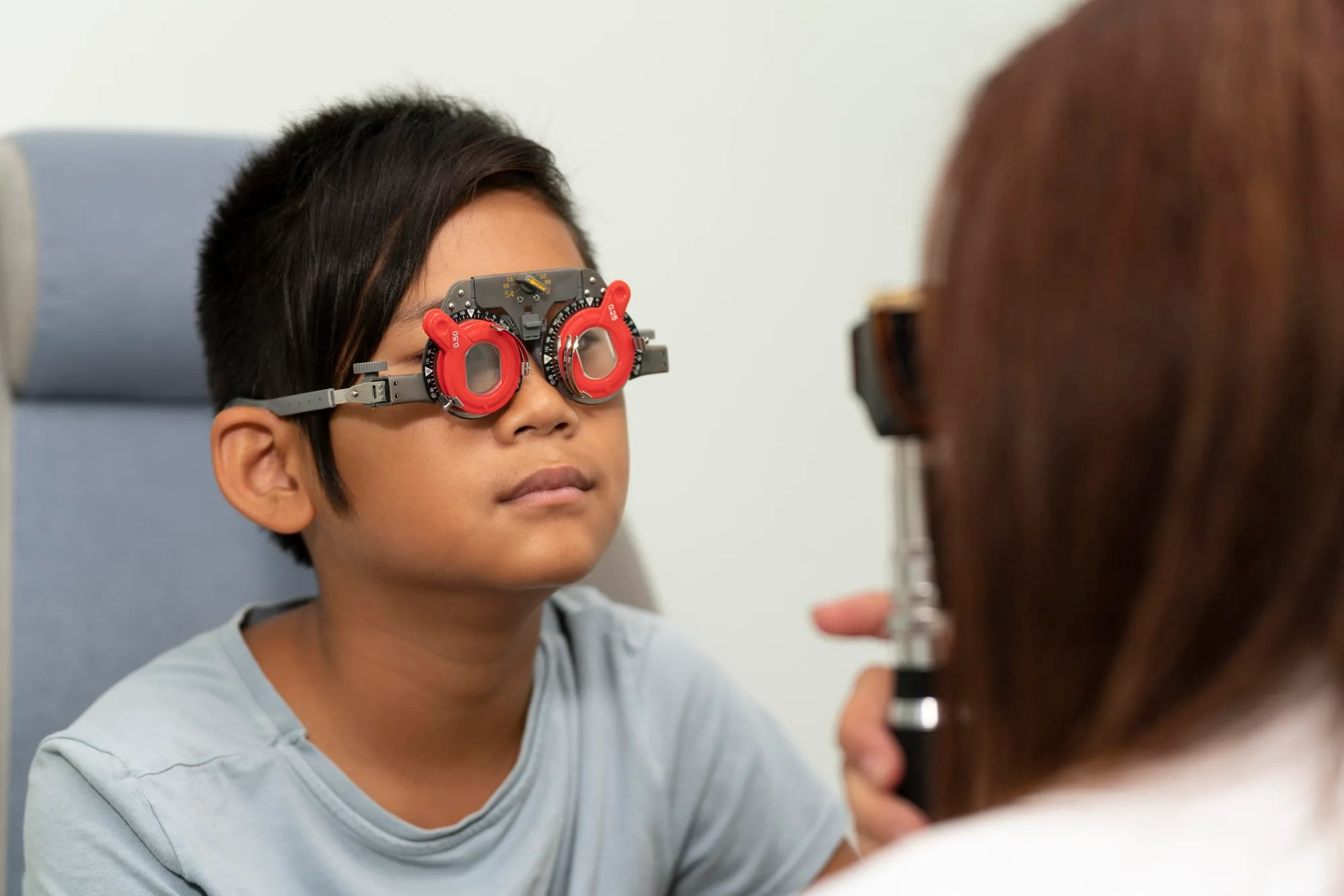
Standard vision charts rely on literacy and cooperation. Pediatric specialists use picture charts, tumbling E tests and preferential looking techniques that work with pre-verbal children or those who cannot yet read.
Retinoscopy and cycloplegic refraction allow accurate prescription measurement even when children cannot provide reliable feedback. These methods temporarily relax the eye’s focusing muscles to reveal the true refractive error.
Diagnosing Conditions Unique to Childhood
Certain eye conditions appear almost exclusively in children or require intervention during specific developmental stages.
Amblyopia, commonly known as lazy eye, occurs when the brain favours one eye over the other during visual development. Early treatment can improve visual outcomes, but the window for intervention closes as children age.
Strabismus, or misaligned eyes, may require patching, glasses or surgery depending on severity and cause. Pediatric specialists assess whether the misalignment is constant or intermittent, and whether it affects one or both eyes.
Congenital cataracts, retinopathy of prematurity and inherited retinal conditions also require early detection and management by doctors familiar with pediatric presentations.
Communication That Builds Trust
Children respond differently to clinical environments. Pediatric eye specialists use language, pacing and interaction styles that reduce anxiety and encourage cooperation.
Explaining procedures in simple terms, allowing time for questions and creating a calm atmosphere all contribute to more accurate examinations and better long-term compliance with treatment.
When Your Child Needs to See a Pediatric Eye Specialist
Certain warning signs suggest your child should be seen by a specialist rather than a general optometrist or family doctor.
- Frequent squinting or sitting too close to the television may indicate an uncorrected refractive error.
- Covering one eye, tilting the head or complaining of double vision can signal alignment problems or other binocular vision issues.
- Red, watery or persistently itchy eyes, especially when accompanied by discharge or light sensitivity, may require medical evaluation beyond basic allergy treatment.
- Difficulty tracking moving objects, clumsiness or poor hand-eye coordination can sometimes be linked to underlying visual processing or focusing problems.
- A family history of childhood eye conditions, premature birth or developmental delays may warrant an early specialist assessment, even when there are no obvious symptoms.

What to Look for in a Pediatric Eye Specialist
Not every clinic advertising children’s eye exams has the same level of expertise or equipment. Parents should consider several factors before scheduling an appointment.
Qualifications and Training
Paediatric ophthalmologists complete medical school, ophthalmology specialist training and additional subspecialty training in paediatric eye conditions.
When choosing a pediatric eye specialist, look for appropriate qualifications and experience in managing children’s eye conditions, such as Dr. Alan Koh Kok Khiang, Chief Consultant Ophthalmologist, who has extensive experience in paediatric ophthalmology.
This specialised pathway ensures competence in diagnosing and managing conditions unique to children.
Optometrists with pediatric focus may also provide valuable care, particularly for routine vision screening and prescription management. Clarify their experience with children and their referral pathways for complex cases.
Child-Friendly Facilities and Equipment
Clinics that regularly see children typically have waiting areas designed to reduce anxiety, staff trained in child communication and diagnostic tools suited to young patients.
Cycloplegic refraction equipment, age-appropriate vision charts and experience managing uncooperative or anxious children all indicate a practice prepared to deliver quality pediatric care.
Clear Communication with Parents
A good pediatric eye specialist explains findings in terms parents understand, outlines treatment options clearly and remains accessible for follow-up questions.
Treatment plans should include realistic timelines, expected outcomes and guidance on monitoring progress at home.
Pediatric Eye Care at VISTA Eye Specialist
Early detection of childhood eye conditions can support healthy visual development and help ensure children receive appropriate care when needed. Whether your child is experiencing changes in vision or you simply want reassurance about their eye health, a comprehensive eye examination can provide valuable answers.
At VISTA Eye Specialist, our experienced ophthalmologists provide comprehensive paediatric eye care, including routine eye examinations, myopia management and the diagnosis and treatment of childhood eye conditions. Every assessment is tailored to your child’s age, needs and stage of visual development.
Visit VISTA Eye Specialist to arrange a comprehensive eye assessment and take the first step towards protecting your child’s vision for the years ahead.